
Full Quran Audio MP3 Offline
AppSoNixLibraries & Demo
4.615.00 Reviews
- Version
- 5.7
- Installs
- 1.00M
- Age Rating
- Everyone
Screenshots
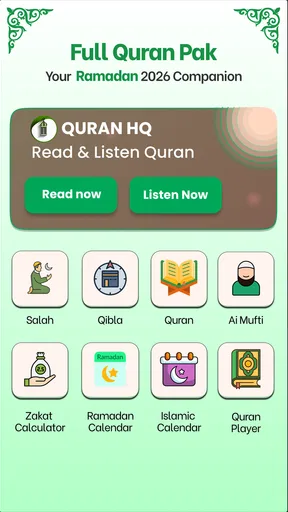
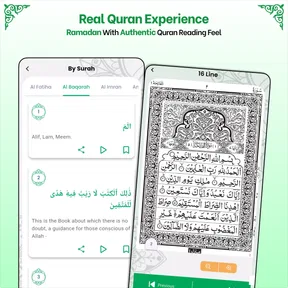
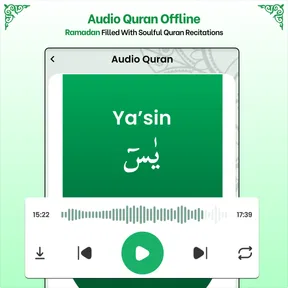
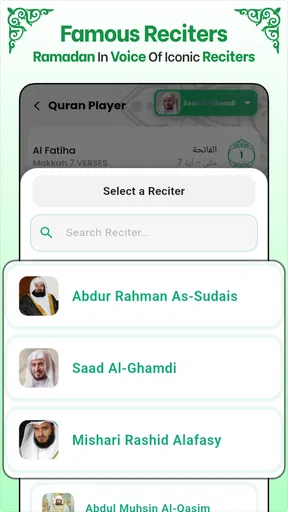

Our Review of Full Quran Audio MP3 Offline
 Analysis by Appyee
I approached Full Quran Audio MP3 Offline as something meant to stay on a phone, not as an app to open once, browse briefly, and forget. Its promise is straightforward: make the Quran available for listening and reading, with offline audio as the central convenience. After spending time with it, I think its strongest quality is practical rather than flashy. It can fit into quiet routines, travel, revision, and moments when a dependable connection is not available.
The app comes from AppSoNix and sits in the libraries and reference side of Android rather than trying to behave like a social platform or a general entertainment player. It is free to install, rated for Everyone, and has reached over one million installs. That combination makes it easy to try without much commitment, although the presence of optional purchases means the free experience should be considered on its own rather than judged only by the headline promise.
My overall impression is positive, especially for someone who wants Quran audio close at hand. Still, the real test is not whether it feels useful during the first few days. The better question is whether it continues to support a reading or listening habit after the initial enthusiasm fades. In my experience, this app has lasting value when you use its offline focus deliberately, but it is less convincing if you expect a highly polished study platform with extensive personalization.
What the first week feels like
The first appeal is the simplicity of the purpose. I do not need to turn a general music player into a Quran library, search through unrelated recordings, or depend entirely on streaming. Opening a dedicated Quran application creates a more focused starting point, particularly when my intention is to listen rather than casually browse.
The offline audio angle is the feature that most clearly changes everyday use. Before relying on it away from home, I would prepare the material while connected to the internet and then test it in airplane mode. That small check matters. It is better to discover how the offline setup behaves in a calm moment than during a commute, a flight, or a place with weak reception.
A useful first-week routine is to choose one listening situation and keep it consistent. For example, I might listen during a quiet walk, while preparing for sleep, or during a regular break. The point is not to turn the app into a rigid productivity tool. It is to remove the repeated decision of what to open and when to begin. A dedicated audio app works best when it becomes part of an existing habit.
The reading side also gives the app more flexibility than an audio-only player. I can switch between listening and following the text, which is useful when I want to stay attentive instead of letting the recitation become background sound. That combination is especially helpful for someone revising familiar passages, learning to follow along more carefully, or trying to make a short daily session more deliberate.
One practical tip is to avoid downloading everything immediately just because offline access is available. I would start with the sections I actually expect to use, listen to them, and then expand gradually. This keeps the phone easier to manage and prevents the offline feature from becoming a large preparation task before the habit has even formed.
The app’s store rating is a strong 4.6 average from around eleven thousand ratings, which suggests that its basic purpose resonates with many users. I would not treat that number as a guarantee of a perfect experience, because audio preferences, reading expectations, and phone storage differ widely. Still, it supports my first impression that the app’s core idea is clear and useful rather than confusing.
Where it fits into an ordinary day
Imagine leaving home for a long trip and losing mobile coverage soon after. With the relevant audio already prepared, the app can remain useful without competing with a streaming service for signal or data. That is a modest benefit, but it is exactly the kind of benefit people notice repeatedly. An offline library is not exciting every time it works; it is simply dependable when the usual connection is missing.
Another realistic scenario is a short evening session. I might read a passage first, listen to it, and then repeat the section without opening another application. This workflow feels more intentional than jumping between a browser, a video service, and a separate text source. It also reduces distractions, which is important when the aim is reflection rather than simply filling silence.
For families, the Everyone content rating makes the app approachable across age groups. I would still set expectations carefully with younger users: the app can provide access to Quran reading and audio, but it does not replace personal guidance, explanation, or a structured learning relationship. Its role is as an accessible resource, not as a complete teacher.
Reading, listening, and understanding are different needs
The app presents itself as supporting reading, listening, and understanding, but those activities should not be treated as identical. Audio can help with rhythm, pronunciation, and attentive repetition. Reading supports visual familiarity and makes it easier to pause on a particular passage. Understanding may require translation, commentary, or instruction beyond what a compact mobile app can reasonably provide.
That distinction is one of the most important things I would tell a new user. If your main goal is recitation practice, the app may be a comfortable daily companion. If your goal is deep interpretation or comparative study, you may eventually want a more specialized resource alongside it. I would not mark that as a failure; it is simply the difference between a convenient Quran library and a complete study environment.
Why it can remain useful from month to month
After the novelty fades, an app like this earns its place through repetition. The strongest long-term case is not that it offers something new every day, but that it makes a meaningful activity easier to repeat. Offline audio supports that by reducing dependence on coverage, while the reading option gives the session more than one mode.
I find recurring value in apps that remove small obstacles. If I have to search for a recording, wait for a page, manage a video feed, and avoid unrelated recommendations, I am more likely to postpone listening. A dedicated Quran app can shorten that path. The benefit becomes clearer over several weeks, when convenience affects whether a routine survives busy days.
There is also a useful trade-off between breadth and focus. A general streaming platform may offer more voices, playlists, recommendations, and playback controls. It may also bring notifications, advertisements, or unrelated content into the same space. This app’s narrower purpose can feel calmer. On the other hand, users who enjoy building detailed playlists or switching constantly between many reciters may find a specialist offline library less flexible than their usual audio service.
I would use the app in layers rather than expecting it to manage my entire religious study routine. One layer could be regular listening during a fixed part of the day. Another could be following the text when I have more attention available. On a busy day, even a short session can preserve continuity. On a quieter day, I can spend longer with the same material instead of treating the app as a checklist.
A less obvious advantage of offline preparation is that it encourages intentional selection. When I choose what to keep available before leaving a connection, I am making a small plan. That can be more effective than opening an enormous online catalog and spending the whole session deciding. The limitation is that planning becomes a responsibility: if I forget to prepare the needed audio, the offline promise cannot help at that moment.
The app has been available since May 22, 2023, and its current version is 5.0. I see that version detail as useful mainly for expectations: this is an established app rather than a brand-new experiment, but users should still keep it updated through their normal app-store routine. Updates can matter for compatibility and reliability, especially as Android devices change over time.
Who benefits most over time
I think it is a good match for people who want a straightforward Quran resource on an Android phone, particularly those who regularly travel, spend time in areas with unreliable connectivity, or prefer not to use a browser for every listening session. It can also suit someone beginning a daily habit who wants one dedicated place for audio and reading.
It is less suitable for a user who needs advanced academic tools, extensive commentary, or a carefully curated audio collection with highly specific filtering. Someone already satisfied with a trusted streaming service may also see little reason to change, especially if that service already provides the exact recitations and text experience they prefer. The offline convenience is strongest when it solves a real problem, not when it is merely another copy of an existing setup.
For iPhone users, the important practical point is that the listed minimum operating system is Android 7.0, so this particular release is positioned as an Android application. I would not assume that the same installation experience applies across mobile platforms. Android users with older devices should also check compatibility before planning a long-term routine around it.
The cost question becomes clearer with regular use
The app is free, which lowers the barrier to testing it properly. Optional in-app purchases range from $1.99 to $10.99 per item. I would begin with the free experience and decide only after using it in the situations that matter to me: at home, offline, during travel, and in a normal reading session.
That approach avoids a common mistake with free reference apps: paying for an option before discovering whether the basic workflow fits. If the free version already supports the habit I want, there may be no reason to spend anything. If a purchase removes a genuine limitation for my use, I can judge it by recurring value rather than impulse. The important point is that the app’s long-term usefulness should not depend on buying something simply because it is available.
Maintenance, friction, and the reasons habits can fade
The main maintenance burden is preparation. Offline audio is valuable only when the desired material has been made available in advance and remains accessible on the device. I would periodically check storage, confirm that important sections still play, and review whether I am keeping more audio than I actually use. These are small tasks, but they are part of the bargain for independence from a connection.
Storage management deserves more attention than it usually receives in a short app description. Audio can accumulate quietly, especially when I download material for several routines and then stop using some of it. A simple monthly review helps: keep the passages that support current practice, remove material that is no longer needed, and prepare again before a trip. This turns offline access into a maintained tool rather than a forgotten cache.
Another maintenance issue is device change. When moving to a new phone, I would not assume that offline content automatically follows the app. I would plan to check the library and reprepare anything essential before relying on it outside coverage. That is a sensible precaution for any offline media application, and it matters more here because the central promise is availability when the network cannot help.
There can also be friction if my preferred workflow changes. Perhaps I begin by listening, then later want closer reading, translation, or explanation. A compact app may serve the first stage well but require another resource for the next. Switching between tools is not necessarily bad, yet it can interrupt concentration. I would decide in advance whether this app is my main daily reader, my offline audio backup, or both.
Fatigue usually comes from repetition without intention. Even meaningful content can become passive background if I always press play while doing something else. To avoid that, I would vary the purpose of a session: sometimes listen attentively, sometimes follow the text, and sometimes repeat a shorter selection rather than letting a long recording run unnoticed. The app cannot create attention for me; it can only make access easier.
Another source of fatigue is an overly ambitious schedule. Downloading a large library and planning lengthy sessions may feel motivating for a week, then become a burden. A smaller routine is more sustainable. I would rather keep a manageable selection ready and use it consistently than build an impressive offline collection that turns into digital clutter.
The app’s high adoption—more than one million installs—makes it feel like a practical choice rather than an obscure experiment. Even so, popularity does not settle personal fit. A user who values highly refined navigation, specialized study functions, or a particular reciter should test those needs directly instead of assuming that a widely used app will match them.
How it compares with usual alternatives
Compared with listening through a video platform, this app has a calmer and more focused identity. Video services may be better when I want discovery, visual teaching, or a broad selection of public content. They are less convenient when I want to avoid streaming, screen-heavy browsing, or unrelated recommendations. For quiet audio access, the offline-first approach here is the more sensible choice.
Compared with a general-purpose music player, the advantage is organization around Quran use rather than personal playlists. A music player may offer stronger queue controls and broader device integration, but it does not necessarily provide the same reading-and-listening context. I would choose the general player when audio management is my priority; I would choose this app when the Quran itself is the center of the session.
Compared with a Quran study application built around translation, tafsir, bookmarking, and detailed search, Full Quran Audio MP3 Offline appears more focused on access and listening. A study-oriented alternative may be better for research or structured learning. This app is more attractive when I want a less complicated daily companion that can remain useful without a constant data connection.
Small practices that improve the long-term experience
Prepare offline audio before travel, then test it without a connection instead of assuming that preparation succeeded.
Keep a small, intentional selection on the phone and review it regularly so storage and choice do not become distractions.
Use reading and listening for different purposes: follow the text when concentration matters, and reserve background listening for situations where it remains respectful and attentive.
Evaluate optional purchases only after the free version has been used in a real routine, including the offline situations that motivated the download.
These habits may sound simple, but they address the difference between installing an app and keeping it. The first week is about discovering convenience. The following months are about reducing friction, preserving attention, and making sure the app still solves a real problem.
My long-term verdict
After the initial appeal fades, I still see a clear reason to keep this app installed: it puts Quran reading and audio in a dedicated place and gives offline listening a central role. That is enough to earn lasting space for users whose routines include travel, limited connectivity, or a desire for a focused alternative to general media platforms.
I would not recommend it as the only tool for every Quran-related need. Readers looking for deep explanation, extensive study controls, or a very specialized audio catalog may be happier with another app or with a combination of resources. The same is true for someone who already has a reliable offline collection and no difficulty maintaining it elsewhere.
For me, the strongest case is practical consistency. The app does not need to reinvent the phone to be useful; it needs to make the next listening or reading session easy to begin. Its free entry point, Everyone rating, offline orientation, and combination of text with audio make that case convincingly. The trade-off is that I must manage downloads, storage, expectations, and attention.
My recommendation is to try it as a focused Quran companion, not as a complete study system. If offline access changes when and where you can listen, it has a good chance of becoming a permanent part of your routine. If you mainly want advanced interpretation, extensive customization, or a broad streaming catalog, another option will probably serve you better. In the right situation, though, this is the kind of quiet utility that proves its value by being ready when you need it.
Privacy and Permissions
See what permissions an app requests and how it handles your data.
- Location
- approximate location (network-based), precise location (GPS and network-based)
- Microphone
- record audio
- Other
- view network connections, full network access, run at startup, control vibration, prevent device from sleeping, Google Play license check
Verdict
Strengths of Full Quran Audio MP3 Offline
- Complete Quran recitation available without an internet connection.
- Audio playback continues reliably in offline mode.
- Simple interface makes surah selection quick and straightforward.
- Useful for listening during travel, commuting, or limited connectivity.
- Small collection of playback controls supports convenient listening.
Limitations of Full Quran Audio MP3 Offline
- Audio files may require considerable storage space on the device.
- Reciter and translation options can be limited compared with larger apps.
- No internet access means updates may not arrive automatically.
- Some devices may stop playback when aggressive battery saving is enabled.
- The app may feel basic for users wanting bookmarks, notes, or progress syncing.
Similar Picks in This Category
View All
PGT: GFX, Launcher & Optimizer
Trilokia Inc.4.5

AusweisApp Bund
Governikus Service GmbH3.7

Cardboard
Google LLC3.2

Gamers GLTool with Game Tuner
Trilokia Inc.4.5

Multi Web Chat - Read Secretly
World Scan & Cleaner3.8

App Cloner Premium & Add-ons
App Listo1.9
Frequently Asked Questions
What is Full Quran Audio MP3 Offline?
Full Quran Audio MP3 Offline is a mobile application designed for listening to the complete Quran without requiring a continuous internet connection. After downloading the available recitations and files, users can play the surahs offline, making the app useful during travel, in areas with weak coverage, or when trying to reduce mobile data usage. The exact features may vary by version and device.
Can I listen to the entire Quran without an internet connection?
Yes, the main purpose of Full Quran Audio MP3 Offline is to provide access to Quran audio after the necessary files have been downloaded to your device. You generally need an internet connection initially to install the app and save the recitations for offline playback. Since audio files can occupy considerable storage space, it is advisable to check available memory before downloading the complete collection.
Does the app include Arabic text, translations, or only audio?
The app is primarily focused on Quran audio in MP3 format, so its core function is listening to recitations. Depending on the specific release, it may also offer Arabic text, translations, surah information, or playback controls, but these additions should not be assumed across every version. Users who require a particular translation, tafsir, or reciter should review the app description and screenshots before installing.
Does Full Quran Audio MP3 Offline offer different reciters and playback options?
Playback features can differ according to the version of the application and the audio package included. Many Quran audio apps provide options such as selecting individual surahs, pausing and resuming playback, repeating a chapter, and continuing from the last position. Some versions may include more than one reciter, while others provide a single voice. Check the current listing to confirm the available recitations.
Is Full Quran Audio MP3 Offline free and safe to download?
The application may be available at no cost, although some versions can contain advertisements, optional purchases, or additional downloadable audio packages. For safety, download it only from a trusted official store or verified source, inspect the developer information, and review requested permissions before installation. Be especially careful with unofficial APK files, as modified downloads may contain unwanted software or may not provide the authentic Quran content.
